Travellers' Choice™ Best of the Best


No two exotic animals look exactly alike. Even within the same species, each tiger, zebra, or leopard wears a one-of-a-kind coat. Stripes curve differently, spots scatter in new ways, and colors shift ever so slightly. But why does this happen, and what do these unique exotic animal markings really mean?
Scientists have spent decades uncovering the answers, and what they’ve found is fascinating. These patterns are shaped by genetics, chemistry, and evolution, and they play a vital role in how animals survive, communicate, and adapt to their natural habitats.

In 1952, British mathematician Alan Turing sought to answer a question that puzzled biologists for centuries: how do animals develop their distinctive markings? Before scientists understood DNA, Turing proposed that the striking animal coat patterns seen in nature could form through simple chemical and mathematical rules. Not just genetics.
In his groundbreaking paper, The Chemical Basis of Morphogenesis, Turing introduced what is now called the reaction-diffusion pattern in animal fur. He suggested that developing tissues produce two kinds of chemical agents, which he named morphogens. These morphogens move through the tissue and interact with one another. One morphogen acts as an activator, stimulating pigment production. The other acts as an inhibitor, slowing or preventing pigment formation nearby.
On their own, each process would lead to a uniform color. But when both happen simultaneously and at the correct rate, they interfere with each other, creating repeating patterns such as stripes, spots, or swirls. This idea showed that even random molecular movement could generate organized designs.
Turing’s theory was remarkably forward-thinking. He proposed it before the discovery of the DNA double helix, relying only on logic, equations, and observation. Yet, his predictions have since been confirmed through modern research. Scientists studying pigment cells and melanocyte function have shown that these cells behave like Turing’s morphogens. They move, react, and communicate during development to form precise exotic animal markings across the skin, or fur.

Recent work on zebrafish pattern formation has provided robust evidence. Studies found that pigment cells in zebrafish send signals to one another that mimic Turing’s activator and inhibitor model. These chemical and cellular interactions produce the fish’s distinct stripes, just as the same process creates the rosettes on leopards or the bands on tigers.
What began as a mathematical idea is now recognized as a biological phenomenon. The Turing patterns across the animal kingdom show that nature often follows simple physical laws to build its complex beauty.
The tiger's stripes are among the most fascinating animal coat patterns in the animal kingdom. They are bold, beautiful, and surprisingly functional. Each tiger has a pattern as unique as a fingerprint. No two are the same, even among siblings.
Scientists have learned that tiger stripe camouflage plays a key role in survival. In Asia's dense jungles and tall grasses, sunlight filters through leaves and creates irregular patches of light and shadow. The dark vertical stripes on a tiger’s orange fur break up its outline, blending perfectly with its surroundings. To the human eye, the pattern looks dramatic. To a deer or wild boar, it looks like part of the forest.
The function of a tiger's stripes patterns also goes beyond camouflage. Stripes may also help regulate body temperature and signal individuality among tigers. Since tigers are solitary animals, recognizing scent and visual cues is essential. Subtle differences in stripe shape and spacing may allow them to identify one another in overlapping territories.




Across the animal kingdom, coat markings help animals survive. Each pattern, from leopard rosettes to zebra stripes, has evolved for a reason tied to hunting, communication, and adaptation.
In predators, markings are tools for stealth. A leopards’ dark rosettes blend with patches of light and shadow in forests, letting them stalk prey unnoticed until the final pounce. Cheetahs, with smaller, evenly spaced spots, are built for open grasslands. Their patterns soften their outline as they sprint after antelope. Even the tiger’s vertical stripes work this way, mirroring tall grasses and dappled sunlight so effectively that prey often don’t spot them until it’s too late.
For social species, markings also act as signals. Plains zebras use their black-and-white stripes to recognize individuals within the herd. When they move together, their stripes blur into one shifting pattern, confusing predators and helping the group stay unified. Ring-tailed lemurs use their striped tails to communicate in the dense forests of Madagascar, waving them high as visual beacons to keep the troop together. In lions, the lion’s mane color and thickness are visual cues of dominance and strength, influencing rivals and mates.
Habitat plays a significant role in how these patterns evolve. Forest-dwellers, like leopards and ocelots, have complex, broken markings that match filtered light through trees. Animals in open environments, such as lions or cheetahs, tend to have plainer coats that match the dry grass around them. Even within a single species, markings can shift based on their geography. For example, Sumatran tigers live in dense rainforests and have thinner and more numerous stripes than Bengal tigers, whose open habitats favor bolder, wider bands.
These variations arise from genetics, light conditions, and behavioral needs. Over generations, species adapt their coat patterns to match the specific landscapes they depend on. The result is a stunning diversity of stripes and spots, each shaped by evolution to help animals blend in, stand out, or communicate, depending on their survival demands.
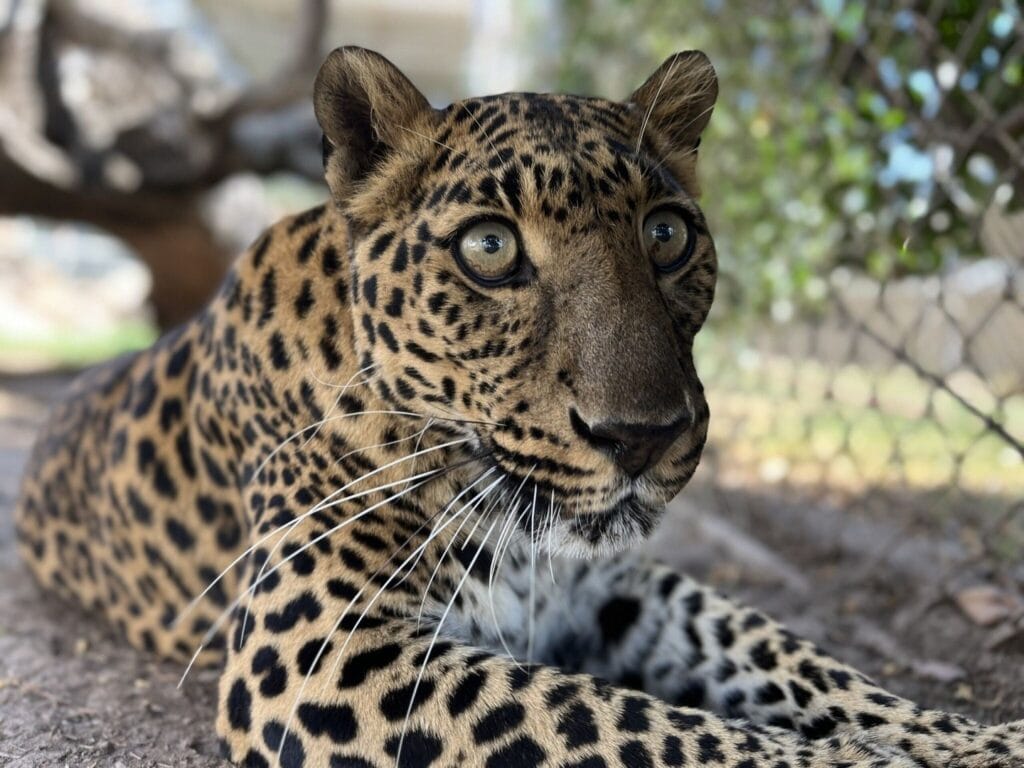
Every stripe or spot begins at the cellular level in exotic animal markings. Deep in the skin are pigment cells called melanocytes, which produce melanin. Melanin is the pigment that gives fur its black, brown, or golden hues. These cells follow precise genetic instructions that determine how much color they release and where it appears.
Key genes guide this process.
When these genetic messages change, the result can be unexpected – a missing patch, a white streak, or a completely new pattern.
Researchers discovered that the DKK4 gene in wild cats helps set up the framework for stripes and spots. It works hand in hand with Alan Turing’s reaction-diffusion pattern. These genetic and chemical cues form the blueprint for each animal’s distinct pattern.
Even minor gene variations can create dramatic results. An excess of melanin produces the dark coat of a melanistic leopard (often called a black panther), while reduced pigment causes the pale fur of a white tiger. These differences show how subtle genetic shifts can shape some of the most recognizable and breathtaking markings in the animal kingdom.
At the San Diego animal sanctuary, Lions Tigers & Bears (LTB), we believe that understanding wildlife is the first step toward protecting it. Every time someone learns how a tiger’s stripes or a jaguar’s rosettes come to be, they see these animals in a new light.Your support helps us continue rescuing, caring for, and educating the public about these incredible species. Visit Lions Tigers & Bears tolearn more about our residents, explore our programs, and join us in protecting the wild.






Ph: 619.659.8078
Fx: 619.659.8841
[email protected]
24402 Martin Way, Alpine, CA 91901
Subscribe for our newsletter & get the latest news, exclusive deals, and to hear amazing stories of our rescued animals!